
“No one ever asks me what I want”: better discovery calls for solopreneurs
Someone told me a story recently.
At the end of a discovery call, a CEO said:
“I have hundreds of meetings a month and no one ever asks me what I want.”
He wasn’t complaining.
He was grateful.
The bar is so low that basic human curiosity looks like a goddamn superpower.
People arrive with a deck, a pitch or a carefully rehearsed monologue about why their thing is incredible.
They get excited about talking to a title.
Then forget they’re talking to a person.
A CEO isn’t a different species
They’re a human with goals.
Problems.
Things they want to change.
Everyone wants something from them.
Far fewer people take the time to understand what they want.
And this isn’t just a CEO problem.
It happens with the consultant, founder, coach or business owner on the other side of your next call.
You’re preparing to explain your service.
They’re hoping you’ll understand their situation.
Those are two different conversations.
The first question I ask on a call
When someone gets on a one-to-one with me, I ask:
“What do you want to achieve on this call?”
Not three minutes of small talk neither of us wants.
Not a presentation about my background.
What do you want to happen by the end?
“Just have a chat” isn’t enough.
A chat about what?
What would make this useful?
Get that clear and you both know why you’re there.
You also give yourself something to listen for instead of waiting for a gap to start pitching.
My discovery-call framework: heaven, hell and what’s in between
I listen for three things.
Their heaven
What do they want?
And why does it matter?
Don’t stop at the first broad answer.
“More clients” is a starting point.
What would more clients change?
How many?
What kind?
What are they trying to build?
You’re looking for their destination in their words.
Not a goal you’ve decided would suit your offer.
Their hell
What’s in the way?
What’s happening now that they don’t want to keep happening?
Maybe they’re relying on referrals.
Maybe the offer isn’t landing.
Maybe they’re taking calls but not closing.
Listen to the specific version of the problem.
Don’t rush to turn it into a lesson before you’ve understood it.
What’s in between
What happens if they don’t get there?
What does staying where they are mean for them?
That’s not an invitation to manufacture fear.
It’s a question about why the change matters.
If you don’t understand the destination, the obstacle and the consequence of staying put, you’re still guessing what the conversation is about.
The answer can make the next step simple
A client told me her goal was $12k a month.
Once that was clear, the conversation became:
“If I can show you a way to do outreach that gets you towards $12k a month, would that be worth exploring?”
Yes.
Now we had something relevant to discuss.
Not a twenty-minute lecture about outreach.
Not persuasion tactics from a YouTube thumbnail.
Listening carefully enough to understand what she wanted.
Then offering a path we could examine together.
You don’t have to teach the whole process during the sales call.
First, find out whether the result matters and whether you can help.
Don’t lead with yourself
Imagine a networking event.
You walk straight up to someone and open with:
“Hi, I’m a LinkedIn coach and I can help you with…”
They haven’t told you they need help.
You haven’t asked anything.
You’ve simply decided it’s time for them to hear about you.
Now imagine you start with something real.
A shared interest.
Something they said.
A relevant detail you noticed.
The conversation feels different because you showed some interest before demanding theirs.
Why should someone be interested in you if you’re not interested in them?
The same applies to your DMs and discovery calls.
What happened when Lori stopped explaining
Lori was a career coach with real skills.
But her sales calls were full of explanations about her frameworks and methodologies.
We shifted the focus to what the prospect wanted and the outcome she could help them achieve.
The next day, she reported three calls, three closes and $7,500.
She didn’t need to squeeze more expertise into the conversation.
She needed to connect that expertise to the thing the person actually wanted.
Before your next discovery call, do three things
1. Stop rehearsing the monologue
Prepare to understand the person.
Know your offer, but don’t arrive determined to deliver the whole pitch regardless of what they say.
Curiosity isn’t something you tack on before selling.
It’s how you find out whether the offer is relevant.
2. Ask what they want to achieve
Then listen to the answer.
Don’t half-listen while loading your next sentence.
If something is unclear, ask.
You’re trying to understand, not finish the questions as quickly as possible.
3. Repeat their goal back before offering a solution
Use their words.
If you can’t explain what they want clearly enough for them to recognise it, keep listening.
Otherwise, you’re offering a route before agreeing on the destination.
That’s how you end up giving an excellent explanation of something nobody asked for.
Better sales conversations start with giving a damn
You don’t need to become louder.
You don’t need a more impressive deck.
You need to stop being so busy trying to be heard that you forget listening is an option.
Find the goal.
Understand the problem.
Then make a relevant offer if you can help.
Want to see how the offer and sales conversation fit together?
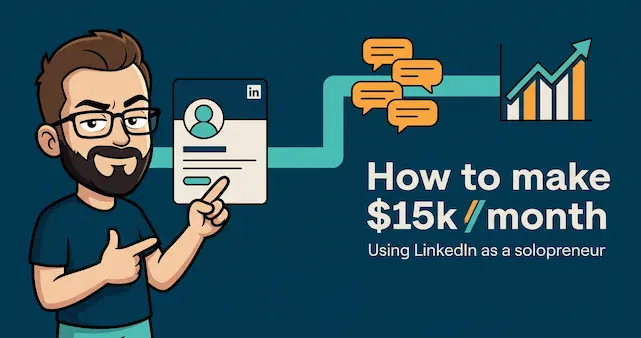
My free masterclass breaks down the framework I teach service-based solopreneurs for building towards $15k months using LinkedIn.
We look at niche, offer and client acquisition so your conversations have a clearer purpose.
If you’re experienced at the work but sales calls still feel like an awkward performance, start here.
P.S. Before telling someone what you do, find out what they want. Revolutionary stuff, apparently.

✌️
Moe




0 Comments